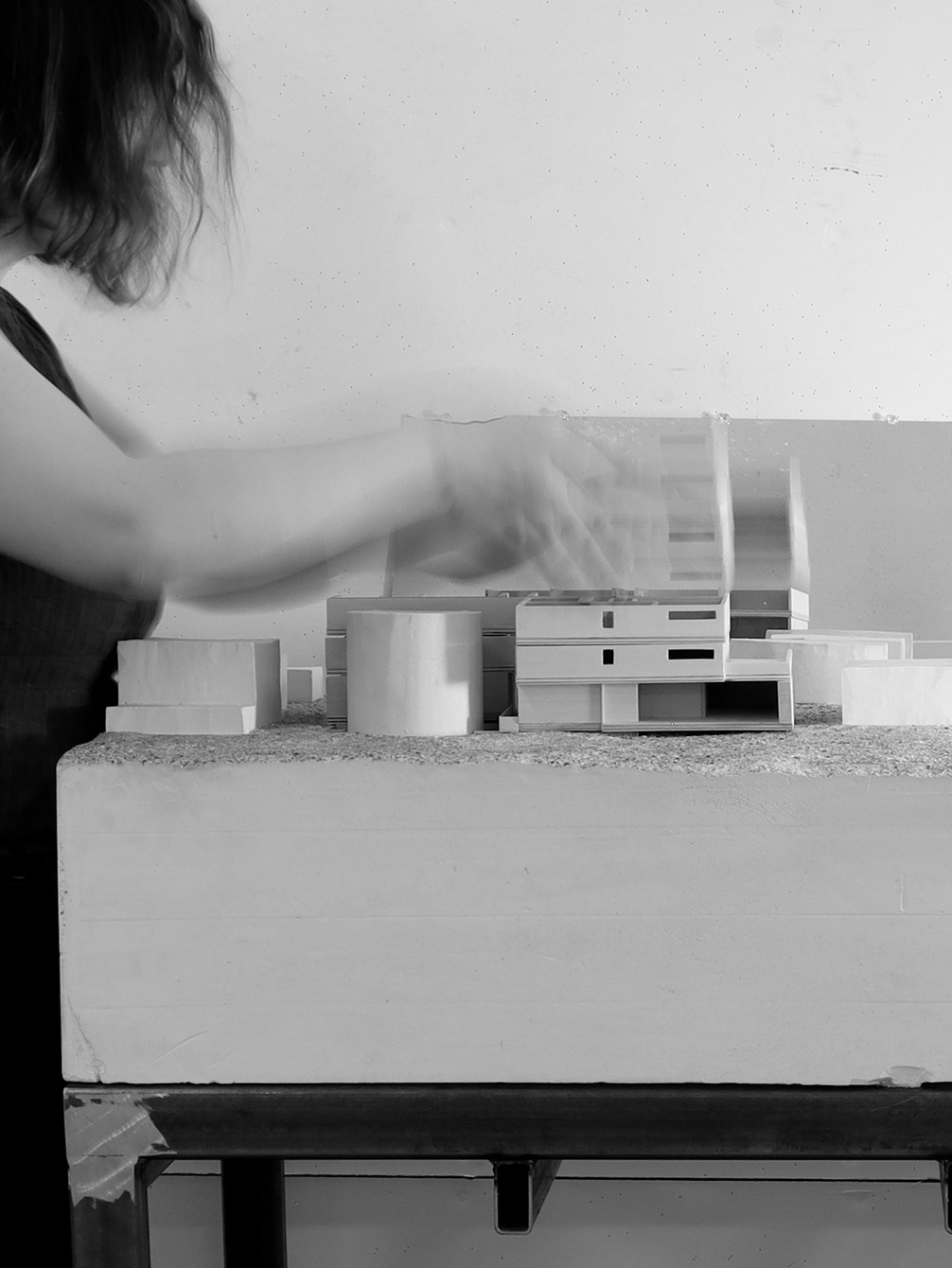
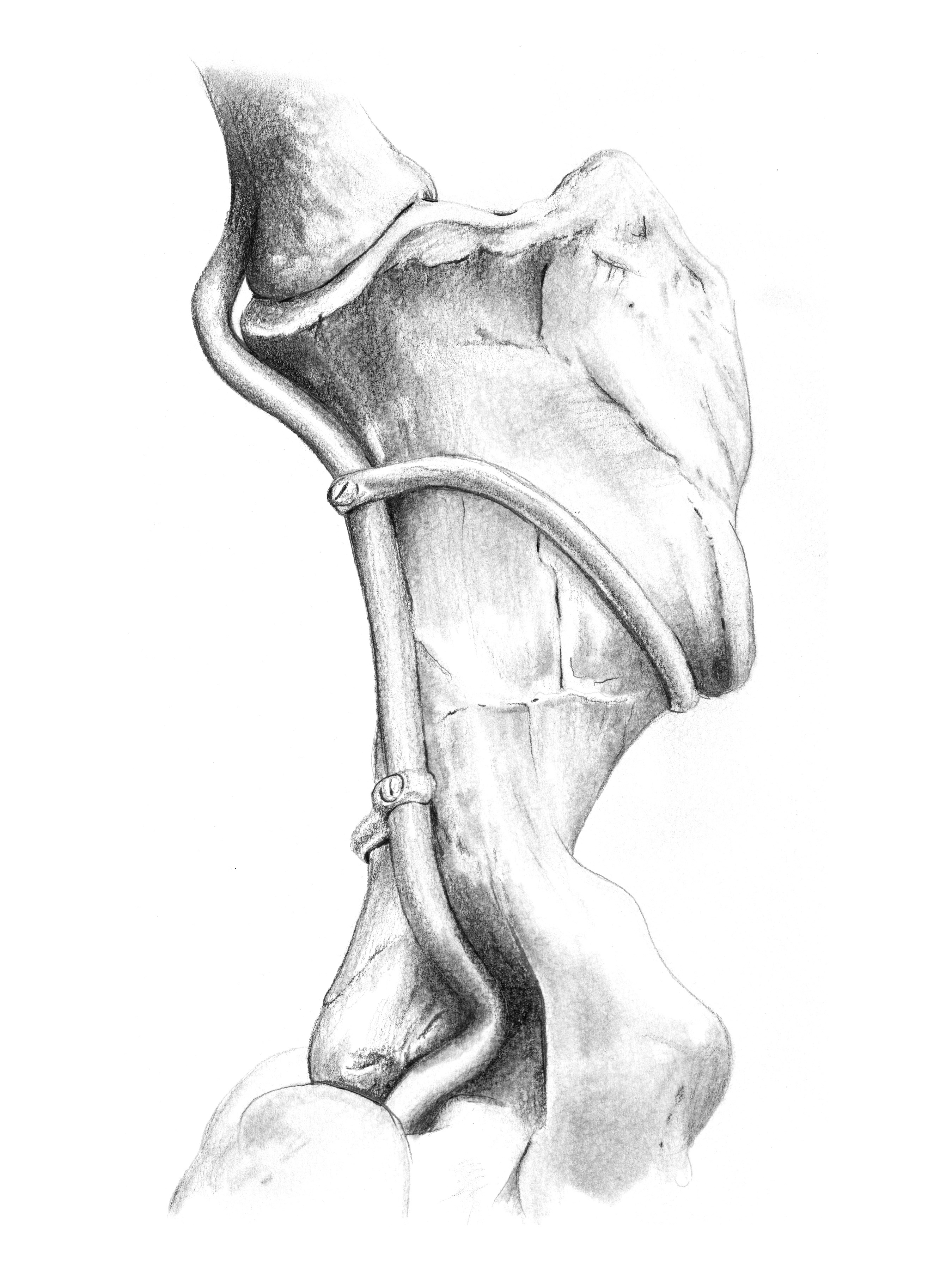
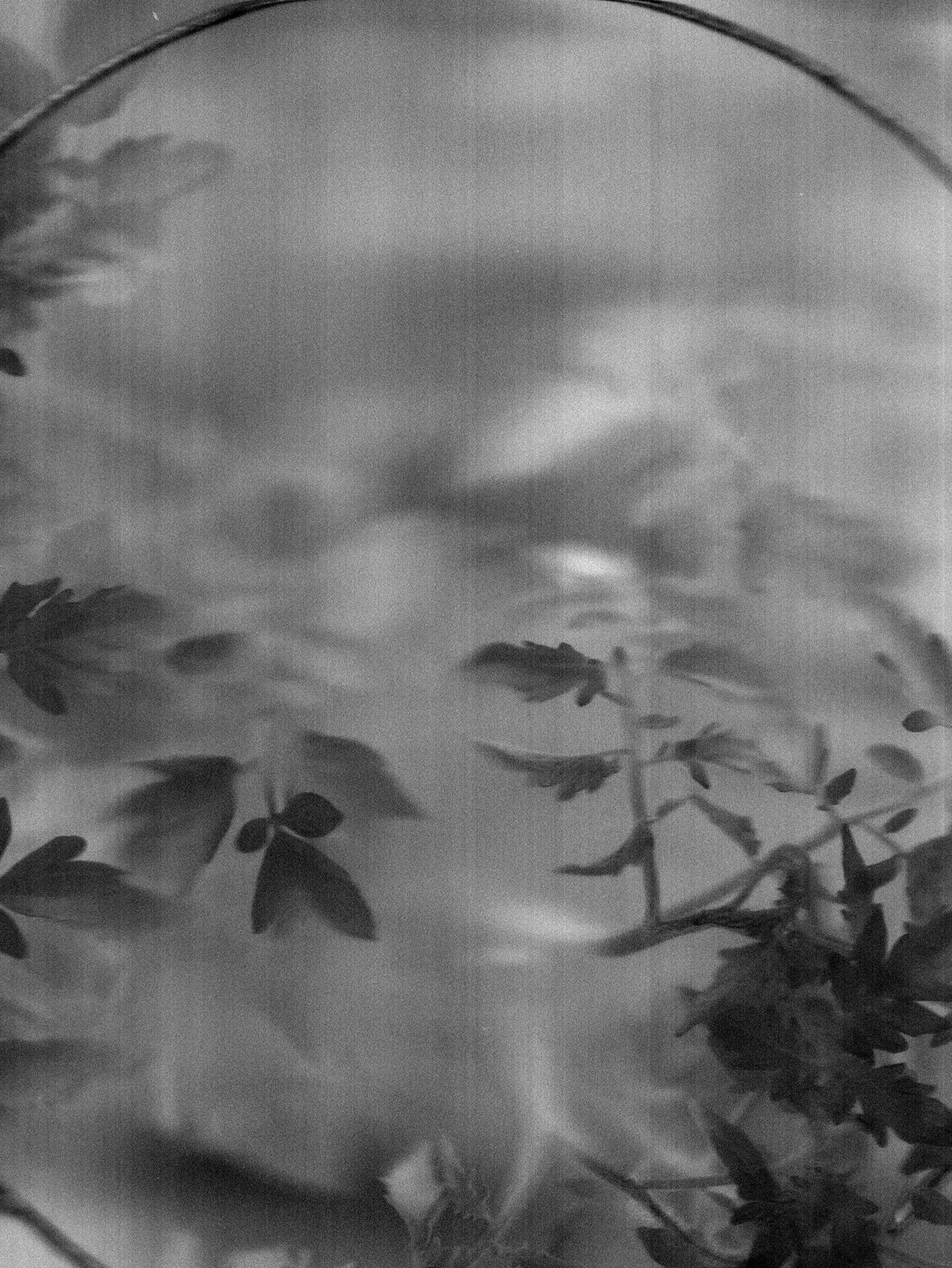
Mémoire d’un instant explores the idea of the fossil as both object and process: a material record produced through pressure, contact, and time. Working through clay, plaster, and fabric formwork, the project translates found and imagined artifacts into cast forms, reducing them to traces, impressions, and distorted remains. Rather than treating material as a neutral means of representation, the casting process becomes part of the inquiry itself, allowing form to emerge through the resistance, deformation, and memory of the mould. The project became an early investigation into how material can register an encounter and preserve something that is no longer physically present.
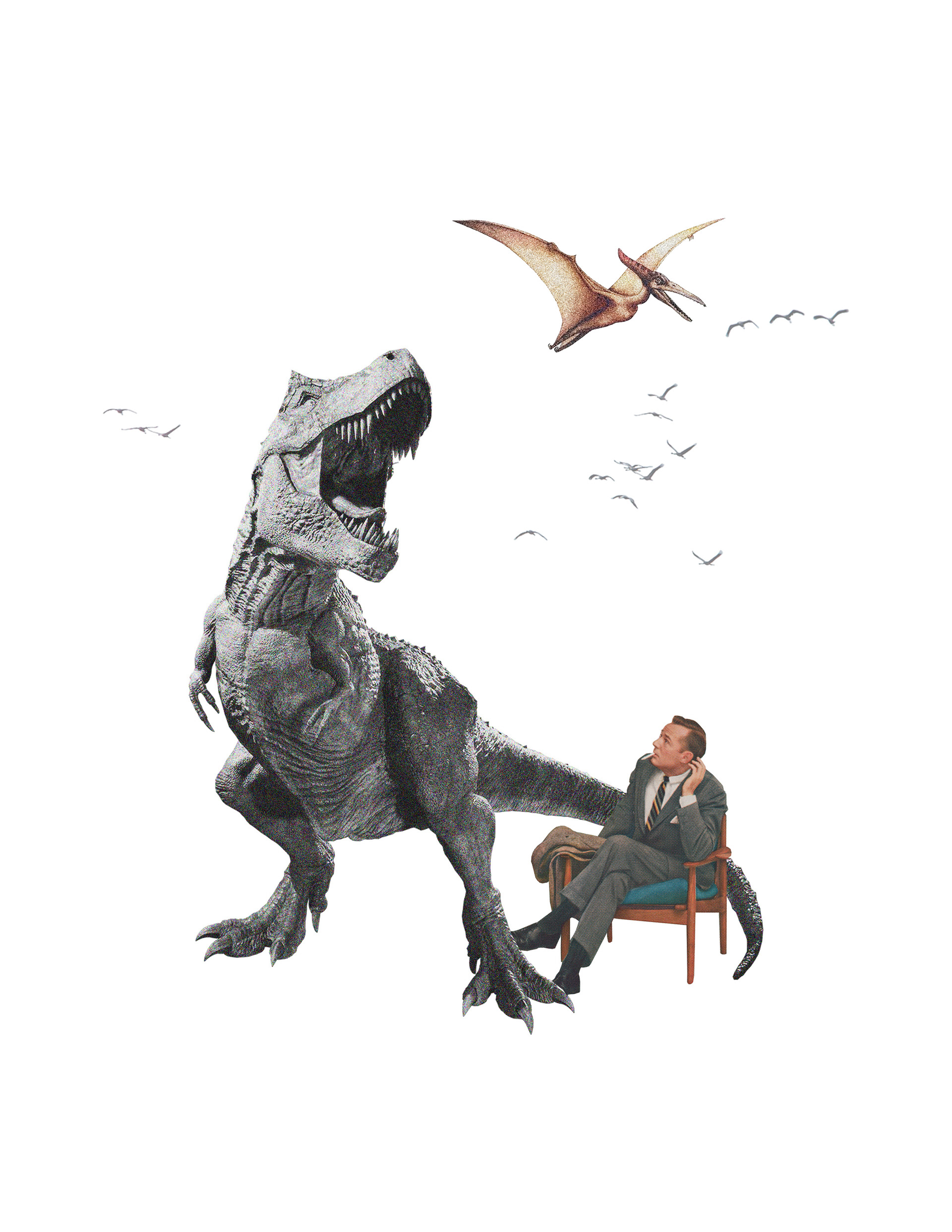
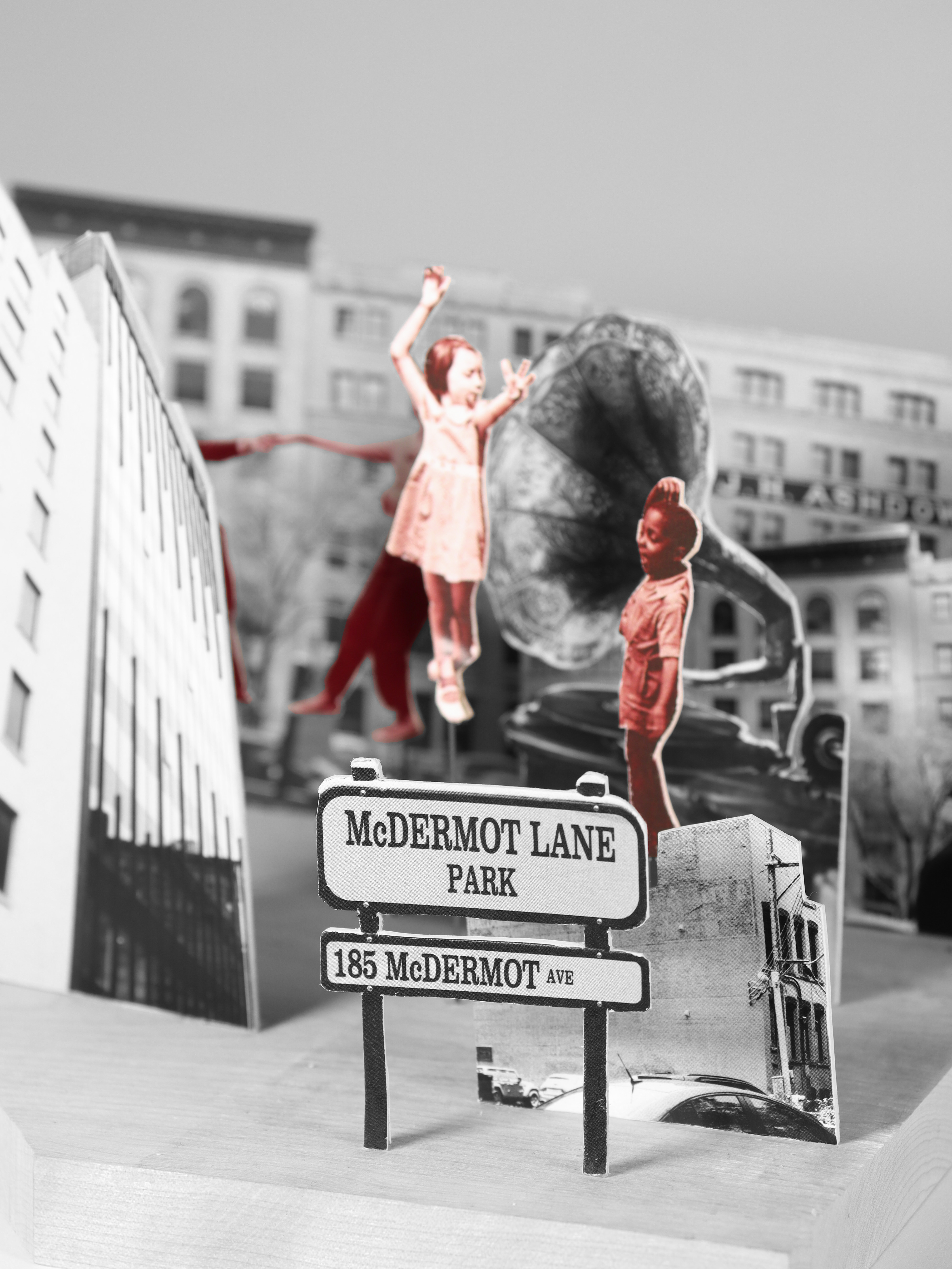
Narrative gives the material studies a larger fictional world to inhabit. Through the figure of the Timekeeper and his cabinet of curiosities, real and invented histories are allowed to overlap, giving each object a role beyond its physical form. The project uses storytelling to build relationships between artifacts, memory, and time, allowing the collection to operate as a personal and speculative history rather than a conventional museum display.
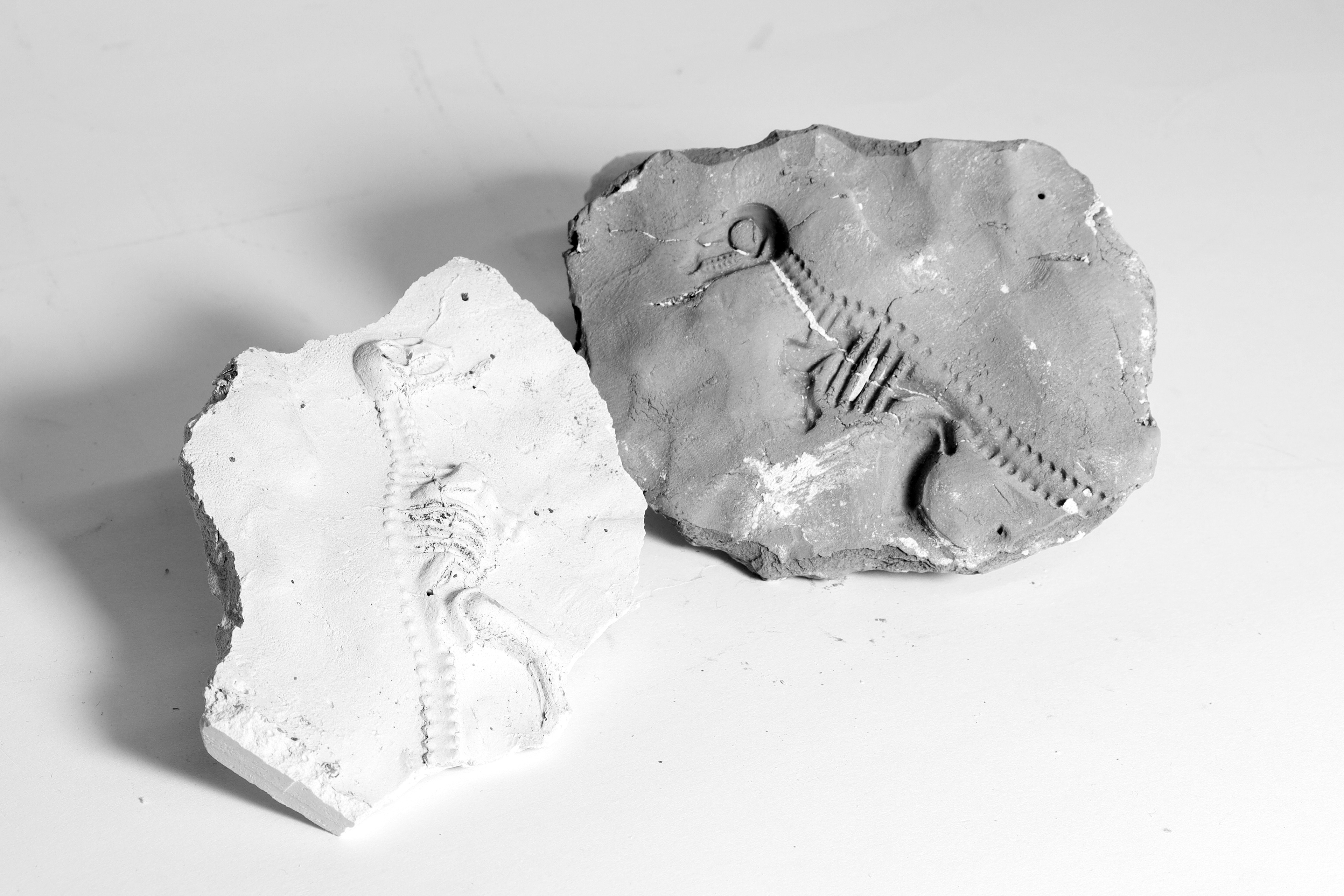
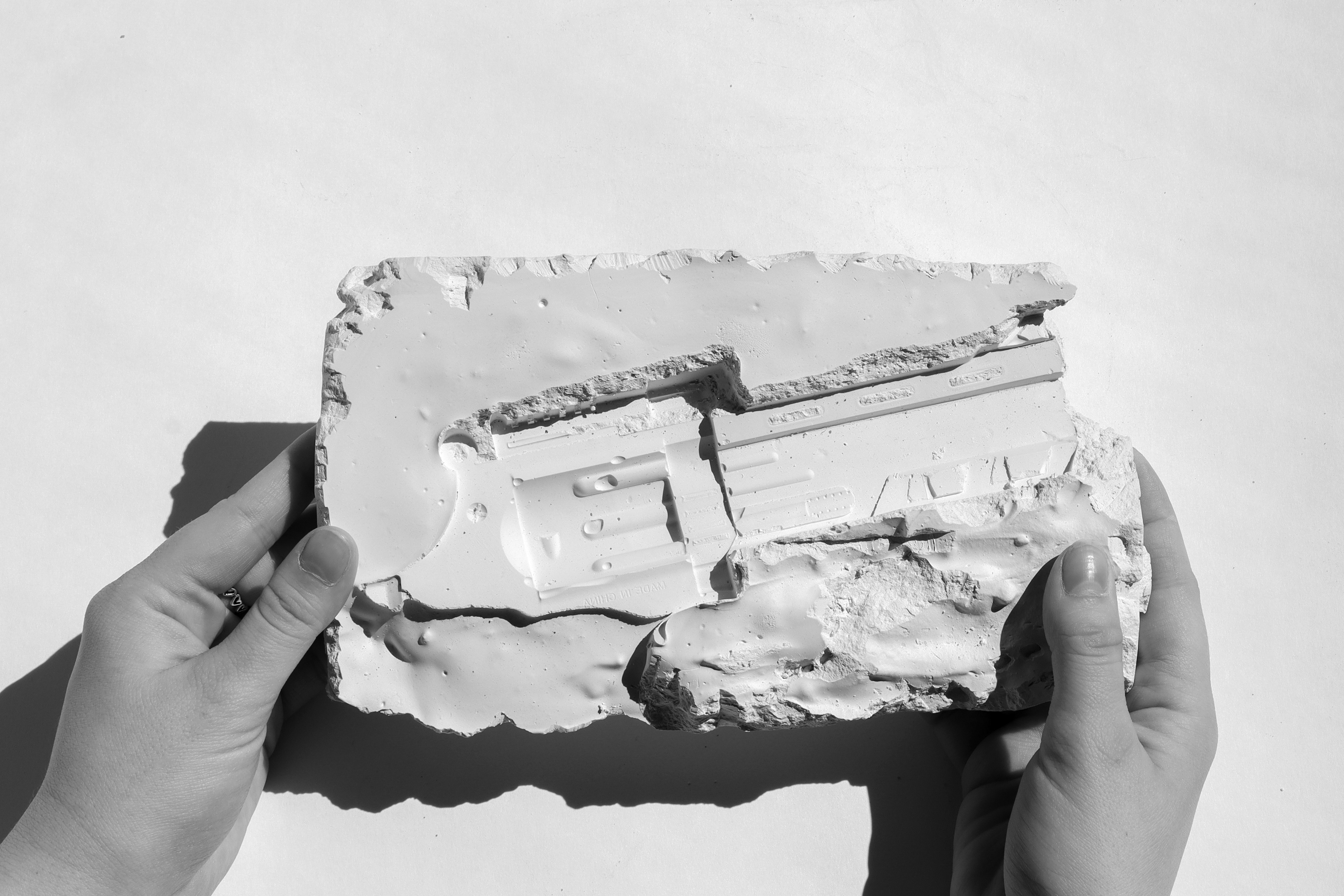
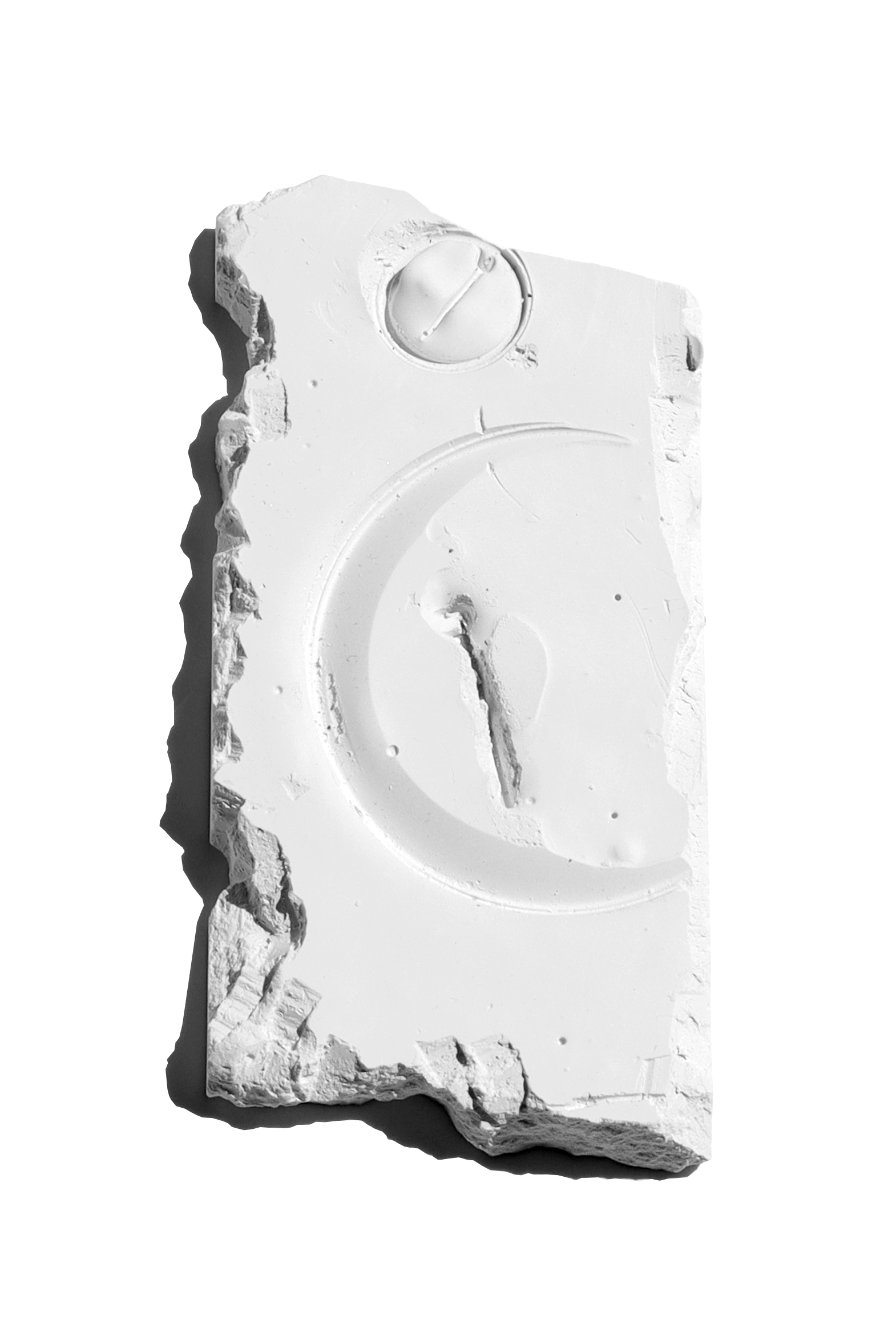
The fossil studies explored casting as a way of freezing an object into a single material moment. Found and invented artifacts were pressed, moulded, and translated through plaster and fabric formwork, producing forms that sit somewhere between evidence and reconstruction. Rather than preserving the original object intact, the process records its shape through deformation, pressure, and the behaviour of the casting material itself.
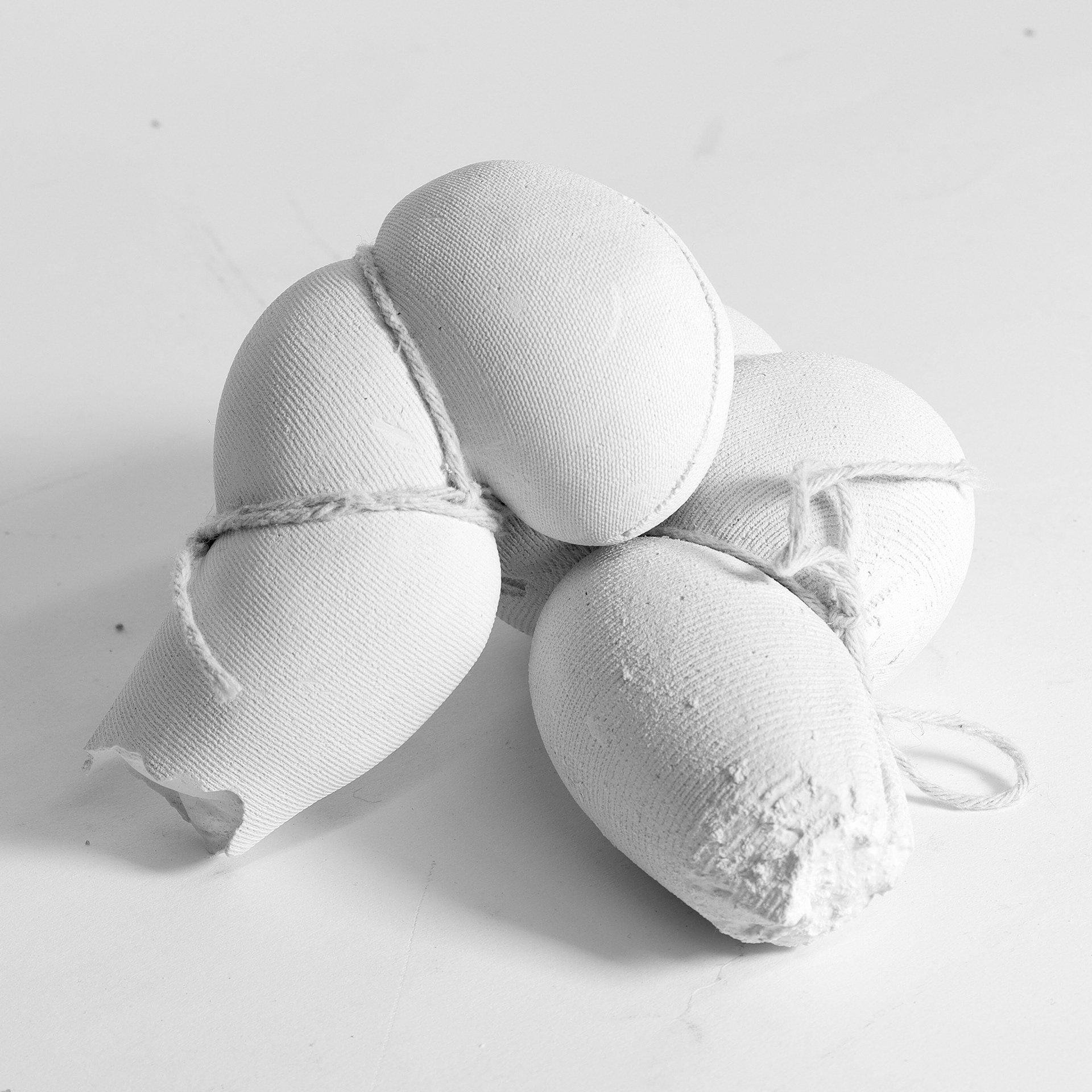
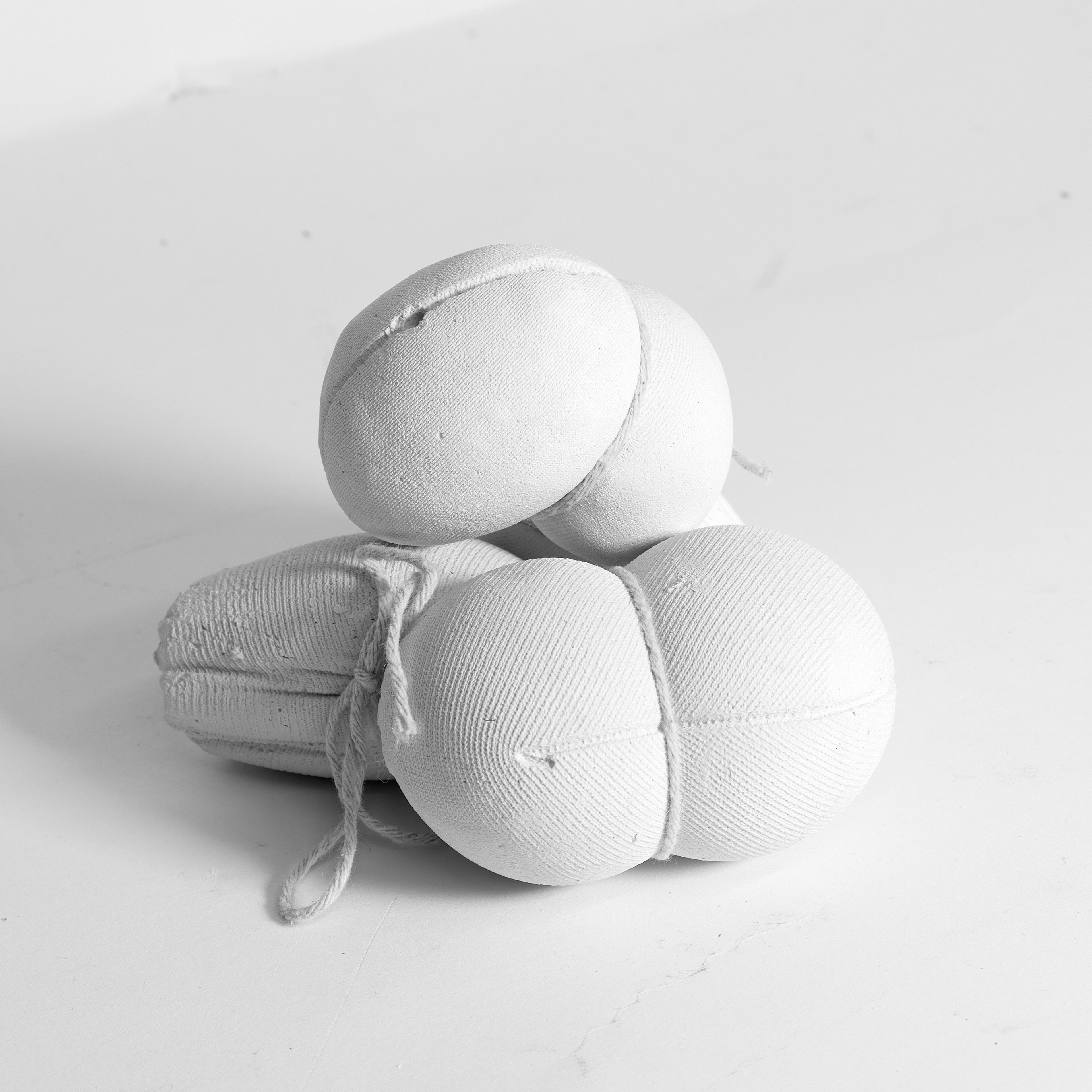
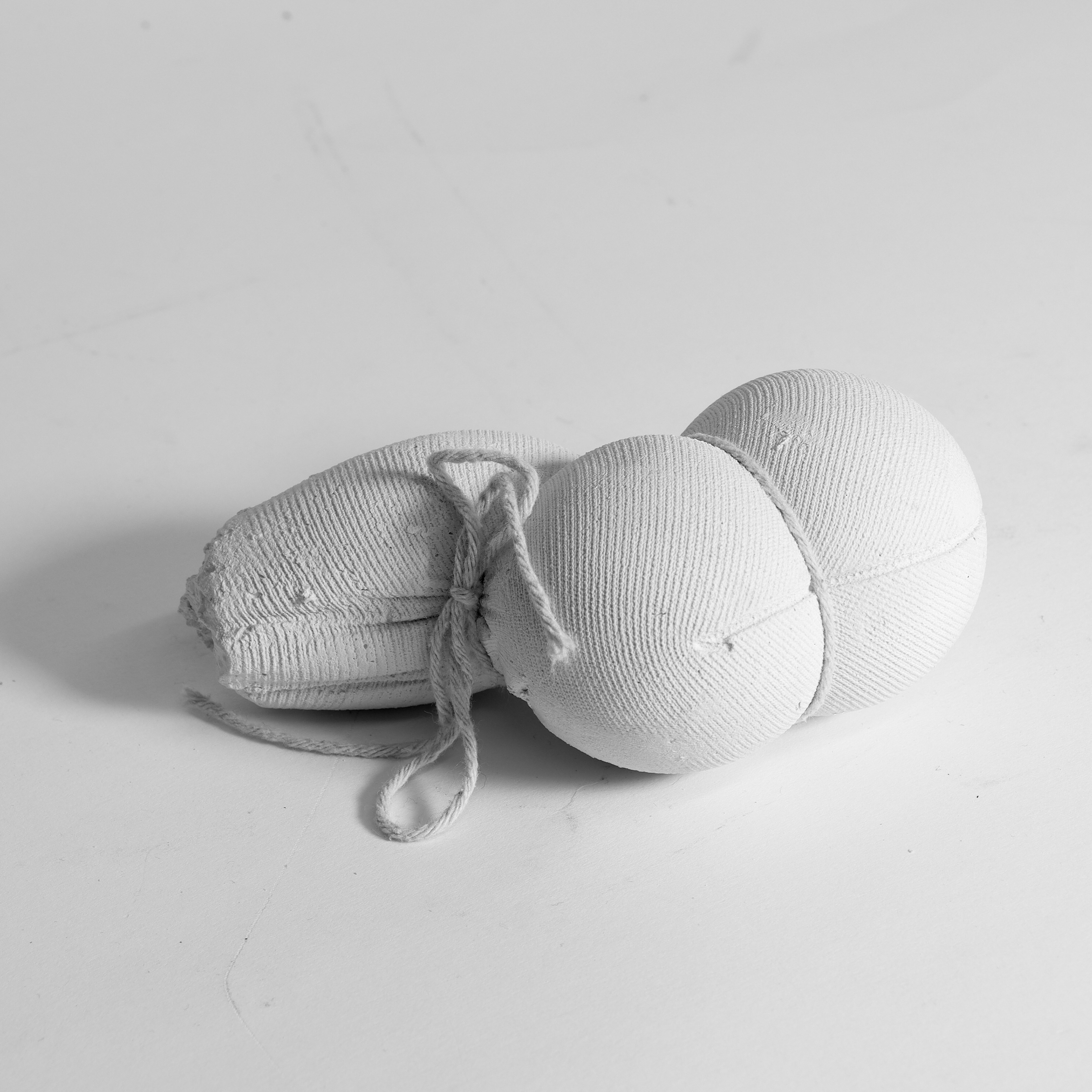
The fabric formwork studies treat casting as a way of arresting an otherwise active and fluid process. As the plaster settles into the flexible fabric, gravity, pressure, and the movement of the material shape each form differently. Once set, that temporary condition becomes permanent. The resulting casts are understood as abstract fossils, preserving a single moment within a process that would otherwise continue to shift, collapse, or disappear.
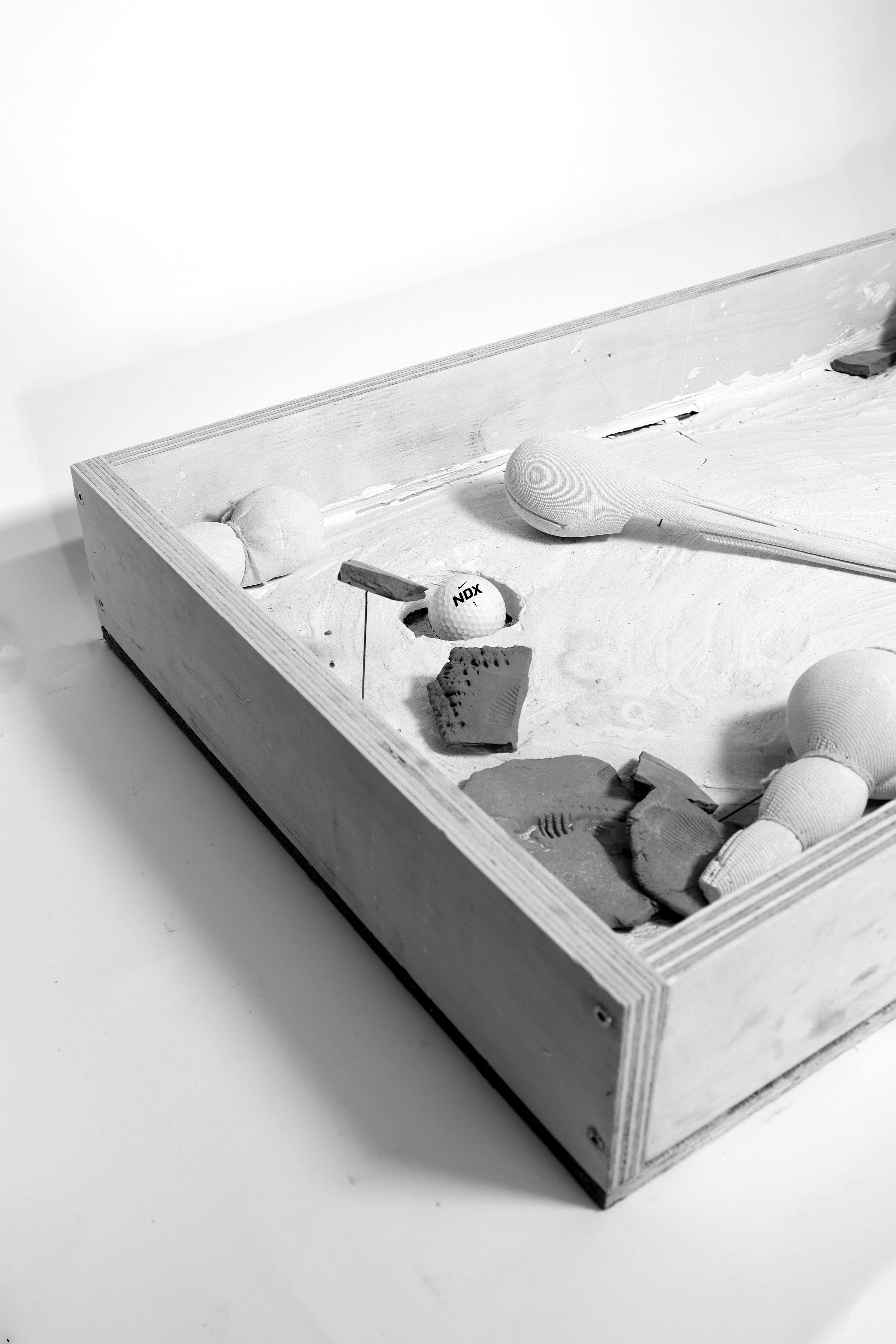
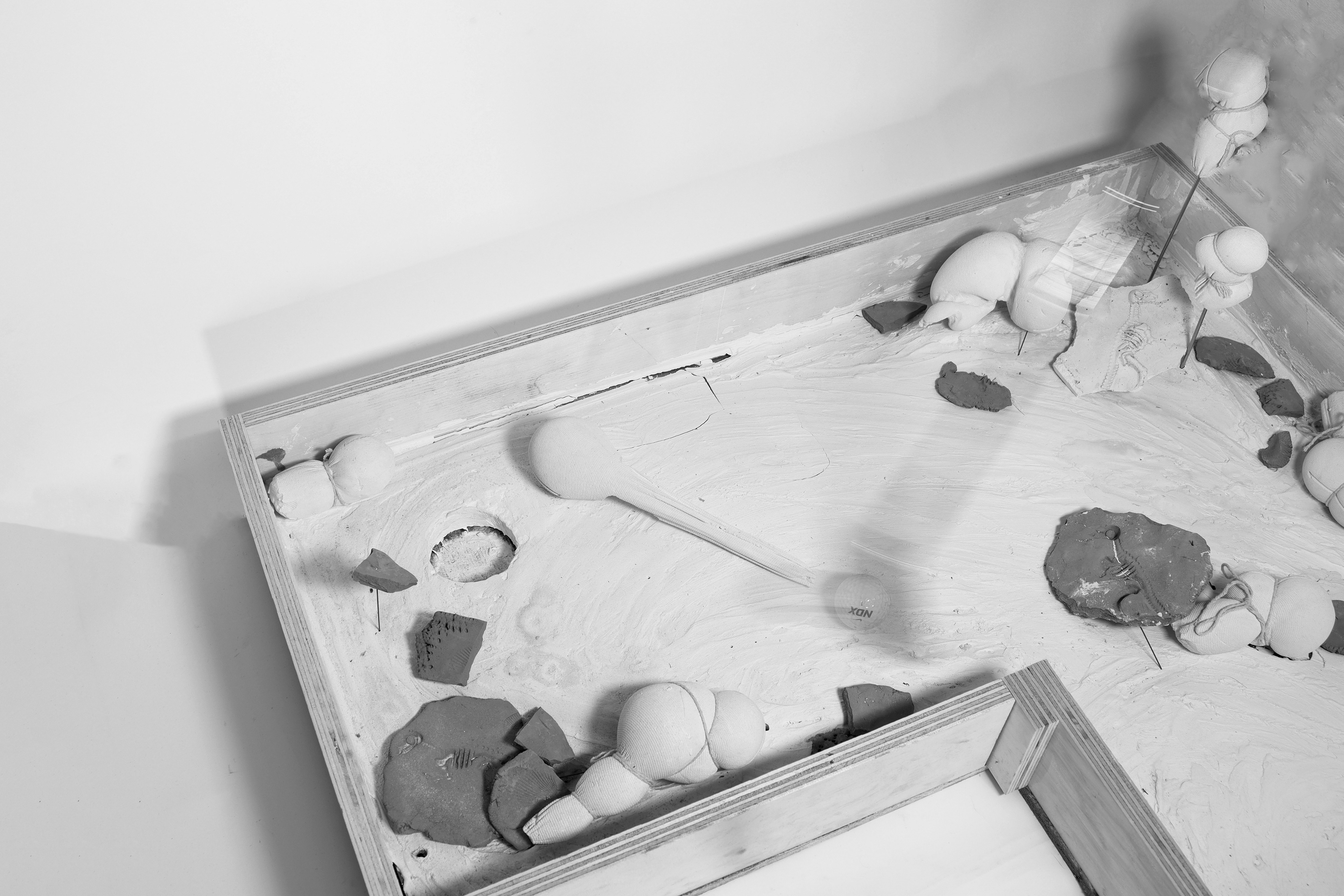
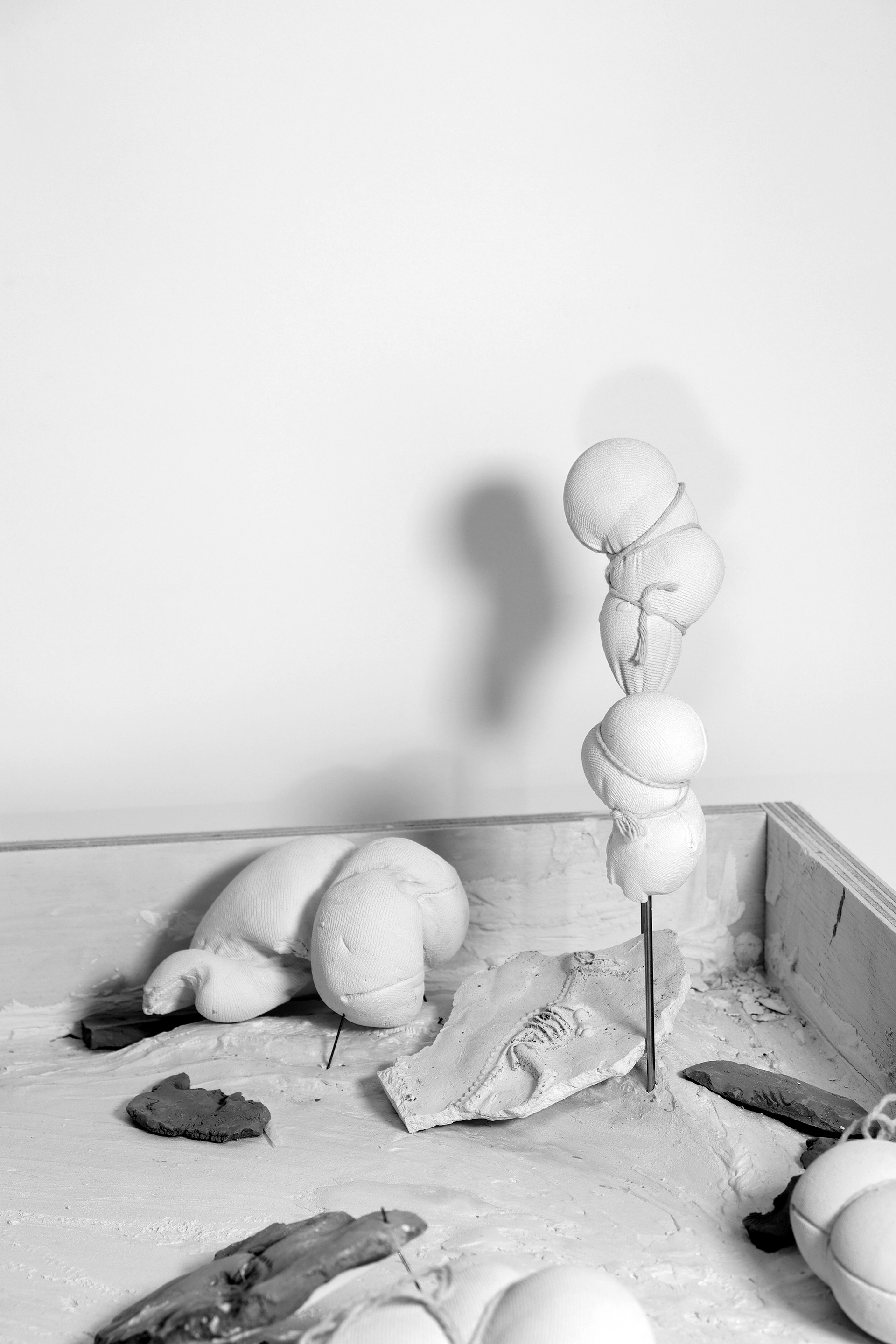
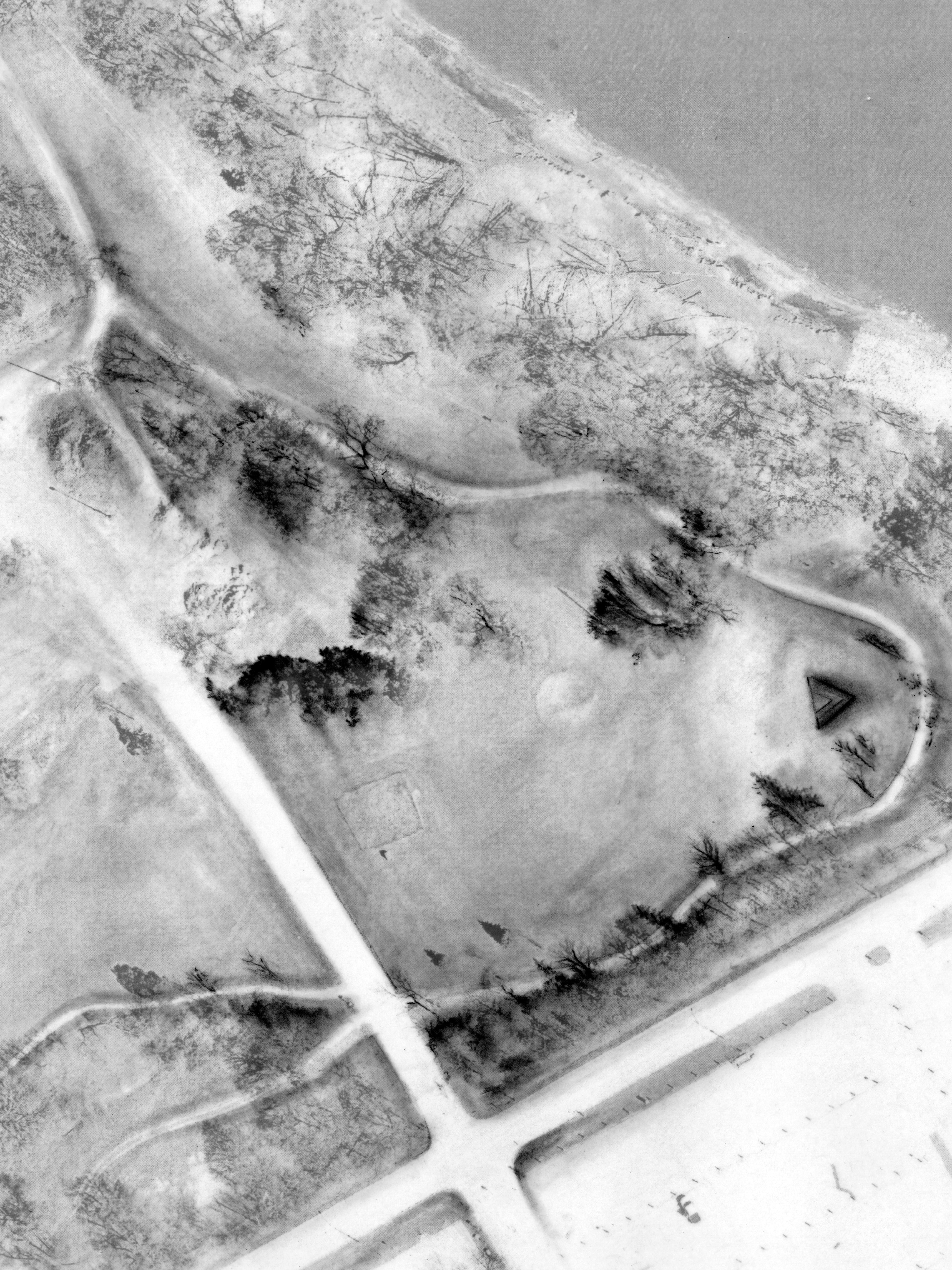
The mini-golf study translates the Timekeeper’s cabinet of curiosities into a spatial sequence, gathering real and invented fossils within a constructed landscape of memory and speculation. As visitors move through the course, objects and fragments are encountered as parts of a larger personal history, allowing the Timekeeper’s imagined version of Winnipeg’s past to unfold spatially rather than through a conventional display.